What Is a Dependability Plan in a Dissertation Proposal? A Comprehensive Guide
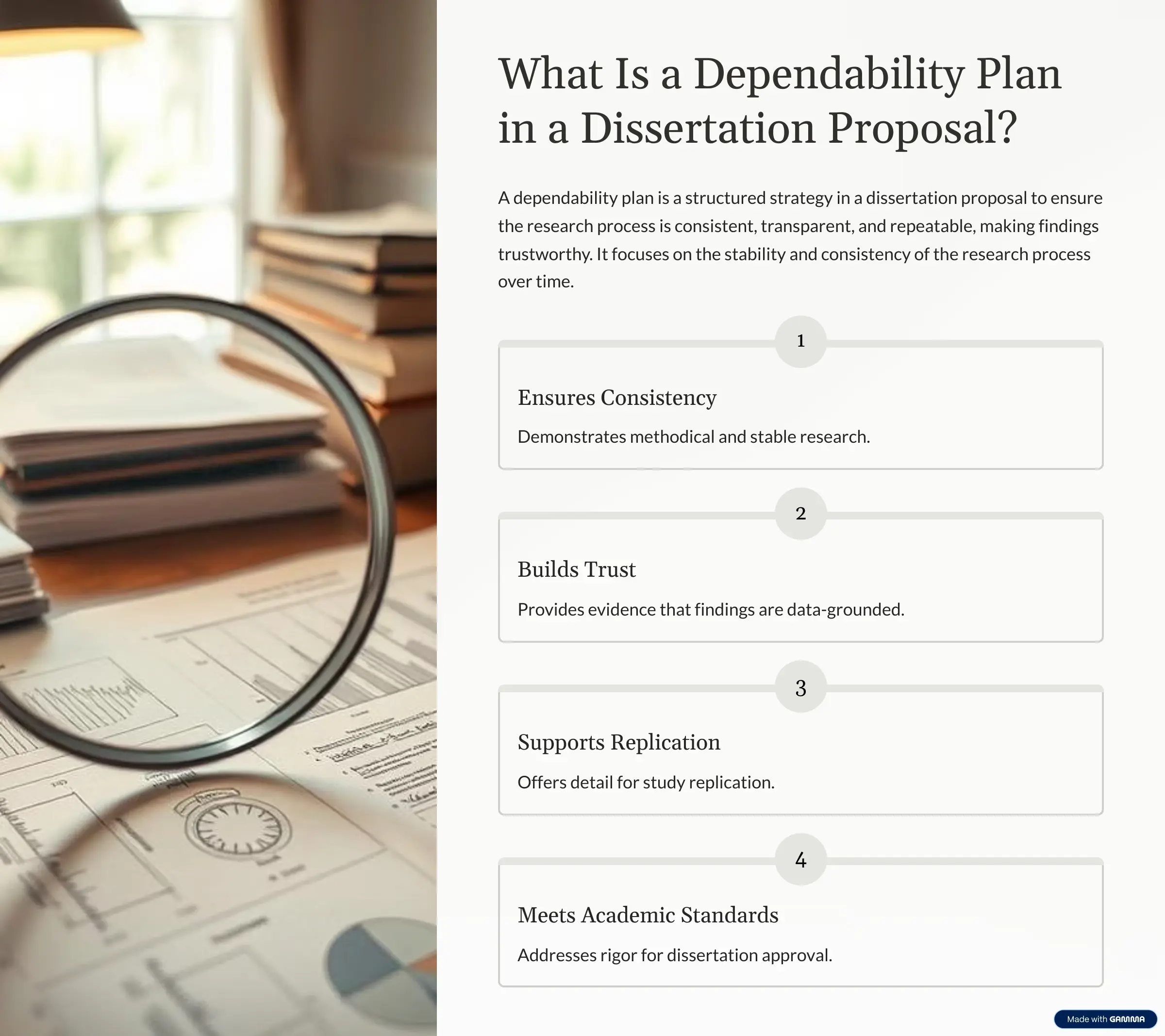
In qualitative research, ensuring the trustworthiness of findings is paramount, particularly in a dissertation where rigor is scrutinized. What is a dependability plan in a dissertation proposal? It is a structured strategy outlined in the proposal to demonstrate that the research process is consistent, transparent, and repeatable, ensuring the findings are trustworthy. Dependability, one of the four pillars of trustworthiness in qualitative research (alongside credibility, transferability, and confirmability), focuses on the stability and consistency of the research process over time.
At Spss Solutions, we specialize in guiding researchers through robust qualitative and quantitative analysis, including crafting dependable research designs. This guide explores what a dependability plan entails, its importance in a dissertation proposal, and how to establish it, with insights on how our services can support your academic success.
Why Dependability Matters in a Dissertation Proposal
Dependability in qualitative research ensures that the study’s findings are consistent and could be replicated by other researchers under similar conditions. Unlike quantitative research, which emphasizes numerical reliability, qualitative research focuses on transparent processes to achieve dependability. In a dissertation proposal, a dependability plan reassures examiners that your methodology is systematic, well-documented, and capable of producing stable results, enhancing the credibility of your research.
A strong dependability plan:
- Ensures Consistency: Demonstrates that the research process is methodical and stable.
- Builds Trust: Provides evidence that findings are grounded in data, not researcher bias.
- Supports Replication: Offers enough detail for others to replicate the study.
- Meets Academic Standards: Addresses rigor requirements for dissertation approval.
Spss Solutions helps researchers develop dependable methodologies, ensuring dissertation proposals meet high academic standards.
Components of a Dependability Plan
A dependability plan in a dissertation proposal outlines specific strategies to ensure the research process is consistent and transparent. Drawing from the competitor’s emphasis on dependability, key components include:
1. Clear Research Design Documentation
Detail the study’s purpose, research questions, and methodology. Explain the rationale for choosing qualitative methods, participant selection, and data collection techniques (e.g., interviews, focus groups). This transparency allows others to understand and potentially replicate the process.
2. Audit Trail
An audit trail is a comprehensive record of all research activities, including data collection, analysis, and decision-making. Document every step—raw data, coding processes, theme development, and interpretations—to show how findings were derived. This is a cornerstone of dependability, as highlighted by the competitor.
3. Triangulation
Use multiple data sources, methods, or researchers to cross-validate findings. For example, combining interviews with observations strengthens consistency. Triangulation reduces bias and enhances dependability by ensuring findings are robust across different perspectives.
4. Peer Debriefing
Engage colleagues or experts to review your methods and interpretations. Peer debriefing, as noted in the competitor’s post, provides an external check on the research process, identifying inconsistencies or biases.
5. Reflexivity
Reflect on your biases, assumptions, and role as a researcher. Maintain a reflexive journal to document how your perspectives might influence the study, ensuring findings remain grounded in participant data.
6. Consistent Coding Procedures
Develop a clear codebook and document coding decisions. Using qualitative data analysis software like NVivo or ATLAS.ti, as suggested by recent research, can standardize coding and enhance dependability.
By incorporating these elements, your dependability plan demonstrates a rigorous, repeatable process, addressing the core question of “what is a dependability plan in a dissertation proposal.”

How to Develop a Dependability Plan
Creating a dependability plan requires careful planning and documentation. Below are practical steps, inspired by the competitor’s focus on actionable techniques:
- Define the Research Framework: Outline your research design, including the theoretical framework, data collection methods, and analysis plan. Specify how these align with your research questions.
- Document Every Step: Create an audit trail by recording all decisions, from participant recruitment to data analysis. Include raw data, notes, and coding frameworks.
- Implement Triangulation: Plan to collect data from multiple sources (e.g., interviews, documents) or use multiple researchers to analyze data, ensuring consistency.
- Engage in Peer Review: Schedule regular debriefing sessions with peers or advisors to review your methodology and findings for consistency.
- Practice Reflexivity: Keep a journal to reflect on your biases and document how they are managed throughout the study.
- Use Software for Consistency: Employ tools like NVivo or SPSS for systematic data management and analysis, reducing human error.
Spss Solutions can assist in implementing these strategies, ensuring your dependability plan is robust and well-documented.
Challenges in Establishing Dependability
The competitor’s post notes challenges in achieving dependability, particularly for researchers who view reality as co-created rather than objective. Common challenges include:
- Subjectivity: Researcher biases can influence interpretations.
- Complex Data: Qualitative data’s volume and complexity can hinder consistency.
- Evolving Contexts: Changing research settings may affect findings.
- Resource Constraints: Limited time or access to peer reviewers can weaken dependability.
Spss Solutions addresses these challenges by offering expert guidance in data management, bias mitigation, and rigorous methodology design.
Best Practices for a Dependable Dissertation Proposal
To ensure a strong dependability plan, consider these best practices:
- Be Transparent: Provide detailed descriptions of methods and decisions.
- Pilot Test Methods: Conduct a small-scale study to refine data collection tools.
- Standardize Procedures: Use consistent interview guides or coding frameworks.
- Seek Expert Support: Consult professionals to validate your approach.
Partnering with Spss Solutions ensures your dependability plan aligns with these practices, enhancing your dissertation’s rigor.
How SPSS Solutions Supports Your Research
At Spss Solutions, we offer tailored services to strengthen your dissertation proposal:
- Qualitative Analysis: Support for coding, triangulation, and audit trails.
- Research Design: Guidance on crafting dependable methodologies.
- Data Management: Expertise in SPSS, NVivo, and other tools for consistent analysis.
- Consulting: Personalized advice for students and researchers.
Our team stays updated with the latest qualitative research standards, ensuring your proposal meets academic expectations.
Why Choose Spss Solutions?
- Expertise: Skilled consultants in qualitative and quantitative analysis.
- Efficiency: Timely support to meet dissertation deadlines.
- Customized Solutions: Tailored guidance for your research needs.
Conclusion
A dependability plan in a dissertation proposal is essential for demonstrating a consistent, transparent, and repeatable research process. By incorporating clear documentation, triangulation, peer debriefing, and reflexivity, you can ensure your study’s trustworthiness. Spss Solutions is here to support you in crafting a rigorous dependability plan that strengthens your dissertation.
Ready to enhance your research? Contact Spss Solutions today for expert support in qualitative analysis and research design. Visit our website to schedule a consultation and achieve a dependable, high-quality dissertation.